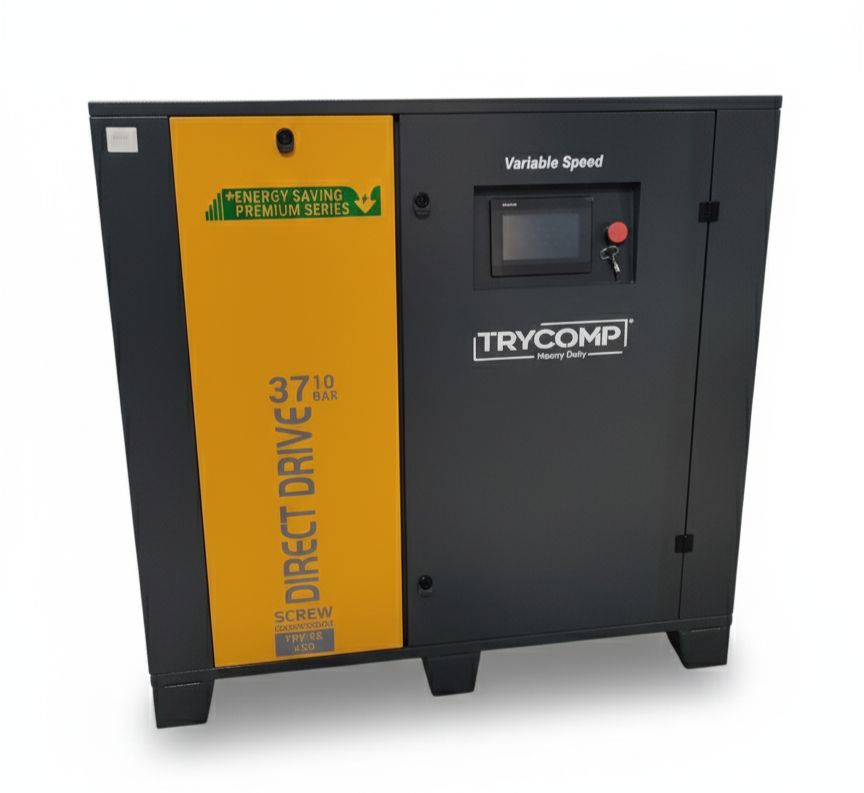
The strongest 30 kW proposal for Chingola is one that explains the full operating cost, service plan and installation scope—not only the compressor specification.
Typical planning role: several production cells or a larger central workshop system. The equipment schedule for 30 kW compressor in Chingola identifies whether this item is included or dependent on site preparation.
Installations in Chingola should be planned around the actual operating environment. For this mining-linked production and maintenance environment, we normally pay particular attention to measured demand, moisture control, service access and pressure stability. This detail is confirmed during the 30 kW site-planning stage for Chingola.
One realistic design case for this page is a mining support department with several users cycling through the shift. The 30 kW unit supplies about 5.0 m³/min at a typical 7 bar reference point, but the decision must be checked at the site’s actual pressure and simultaneous demand. On the Chingola project, we confirm this specifically for the 30 kW package and the measured duty profile.
Configuration priorities for the Chingola air system
01 · Demand
Map the working air profile
For konkola in Chingola, list the equipment behind pneumatic equipment, cleaning, tooling and production support and separate steady consumers from short peaks. This determines whether 30 kW is a base-load match or only one part of the final system.
02 · Air treatment
Protect the sensitive point of use
The package should address measured demand, moisture control, service access and pressure stability. A matched dryer and filter train must meet the most sensitive konkola application without adding unnecessary pressure loss. The 30 kW design for Chingola is checked against this requirement before compressor, receiver and dryer selections are finalised.
03 · Control
Choose fixed-speed or VSD from data
Where mining support demand changes through the shift, VSD may reduce unloaded operation. Where demand is stable, fixed-speed can remain the better-value option. The choice should follow a demand profile, not a general rule. This is one of the checks used to distinguish the 30 kW Chingola package from a generic equipment-only quote.
Local operating profile
Design priorities for Chingola
For this 30 kW Chingola brief, the same operating priorities are converted into practical equipment and installation choices.
For this 30 kW page, the strongest proposal is one that links receiver storage, room ventilation, filtration and maintenance access to the konkola process instead of treating them as optional extras.
Mining-Linked Production And Maintenance EnvironmentPrimary process: pneumatic equipment, cleaning, tooling and production supportDesign emphasis: measured demand, moisture control, service access and pressure stabilitySuggested receiver review: 1 000–2 000 L
Application snapshot for this Chingola page
Sector
Likely compressed-air uses
Specification priority
Konkola
pneumatic equipment, cleaning, tooling and production support
measured demand, moisture control, service access and pressure stability
Mining Support
workshop tools, plant maintenance, pneumatic controls and cleaning
dust loading, ventilation, spares planning and resilience during maintenance
Copper Mining
maintenance workshops, pneumatic controls, cleaning and plant-support duties
dust control, filtration access, rugged installation and service readiness
Before we price the machine
Five questions for the Chingola quotation
Which tools, machines or valves can operate at the same time?
What is the minimum pressure required at the furthest point of use?
How many hours per shift will the compressor run, and how many shifts are worked?
Is the demand steady, cyclical or strongly variable during the day?
What air quality is required after the dryer and filters?
Three ways to package the 30 kW compressor
Integrate into an existing air station
Supply the compressor for connection to a suitable existing receiver, dryer and distribution system in Chingola. Existing equipment should be checked for capacity and pressure loss first. This forms part of the technical review for the 30 kW Chingola quotation rather than being treated as a standard assumption.
Complete production-air package
Combine the 30 kW machine with a reviewed 1 000–2 000 L receiver range, refrigeration dryer, pre-filter, coalescing filter and automatic drains for the konkola duty.
Growth and uptime package
Allow connection points, controls and pipe capacity for future mining support demand. Where air loss stops production, evaluate standby capacity or an emergency compressor connection. Before order placement, this point is reviewed for the specific 30 kW installation in Chingola.
Motor size alone does not confirm suitability. Compare usable flow at pressure, duty cycle and air quality for each option. The 30 kW design for Chingola is checked against this requirement before compressor, receiver and dryer selections are finalised.
Questions specific to this 30 kW Chingola brief
Yes. We can quote the equipment, delivery and agreed commissioning scope for Chingola, with ongoing access to service parts, oils, filters and separator elements. Cross-border projects are quoted with the required logistics and documentation clearly defined. The Chingola system brief links this requirement to the control and air-treatment plan for the 30 kW machine.
List every air user that can run together, its required pressure and the operating hours. The 30 kW model is rated at about 5.0 m³/min at a typical 7 bar point, but the final choice must allow for pressure, leakage, dryer loss and sensible growth margin for the konkola duty.
Fixed-speed can suit a stable base load. VSD is normally considered when the konkola demand changes materially through the shift. A simple air-demand profile is the best way to compare energy use rather than choosing VSD automatically.
1 000–2 000 L is a practical starting range, but the receiver must be checked against demand peaks, control method and available space. Short events linked to pneumatic equipment, cleaning, tooling and production support may justify more storage instead of oversizing the compressor. The 30 kW design for Chingola is checked against this requirement before compressor, receiver and dryer selections are finalised.
Local service planning
30 kW air compressor service and repairs for Chingola, Zambia
Service support in Chingola, Zambia is more productive when nameplate, alarms, hours and access details are supplied before travel. For a 30 kW unit, review cooling, separator restriction, control valves, motor condition and demand.
Planned service
Maintenance prepared by model and hours
Oil, filters, separator, drive, cooling, drains and controls are scoped from the exact machine.
Breakdown support
Evidence before parts replacement
Alarms, pressure, temperature, current and behaviour help separate component, demand, ventilation and pipework faults in Chingola, Zambia.
Service contracts
Records and forward planning
Planned visits, reporting, open actions and critical-spares planning can be aligned to the konkola duty.
System checks
Compressor, dryer, receiver and distribution
Air treatment, drains, storage, leaks and point-of-use pressure can be included where they affect the problem.
Yes. Send the model, serial, hours, service history and exact Chingola, Zambia site details so travel, parts and shutdown needs can be quoted.
Send the alarm, operating symptom, available pressure and temperature, nameplate and controller photos, site contact, access details and production impact in Chingola, Zambia.
Coverage note: service availability, travel and response are confirmed for the exact site. This page describes coverage and does not represent a separate staffed branch in Chingola, Zambia.
Build the 30 kW quotation around your actual Chingola site
Send the air users, pressure, hours, electrical supply, existing equipment and delivery position. We will respond with a defined compressor, receiver, dryer, filtration and installation scope. For Chingola, the 30 kW recommendation records this item in the equipment and installation schedule.