
Why motor kW is not the starting point
A compressor is selected to deliver a required volume of air at a required pressure. Motor power is the result of that duty, not the best first input. Two compressors with the same motor rating can have different free-air delivery at different operating pressures. Begin by listing every pneumatic consumer, the flow it needs and the pressure it must see while operating.
Build a realistic demand profile
Add the rated consumption of tools, cylinders, valves, blow-offs and production equipment that can operate at the same time. Do not simply total every nameplate value if many consumers are intermittent. Apply a documented simultaneity factor, then add a leakage allowance based on the condition of the network. New plants should also reserve capacity for planned expansion, but excessive oversizing creates inefficient unloaded running.
Set the pressure from the most demanding process
Identify the minimum pressure needed at the point of use, not only at the compressor outlet. Allow for pressure loss through dryers, filters, pipework, fittings and long distribution runs. Raising the whole system pressure to compensate for one poorly supplied machine increases energy use across the plant. Sometimes the better answer is larger pipework, a local receiver or a dedicated booster.
Check duty cycle and demand variation
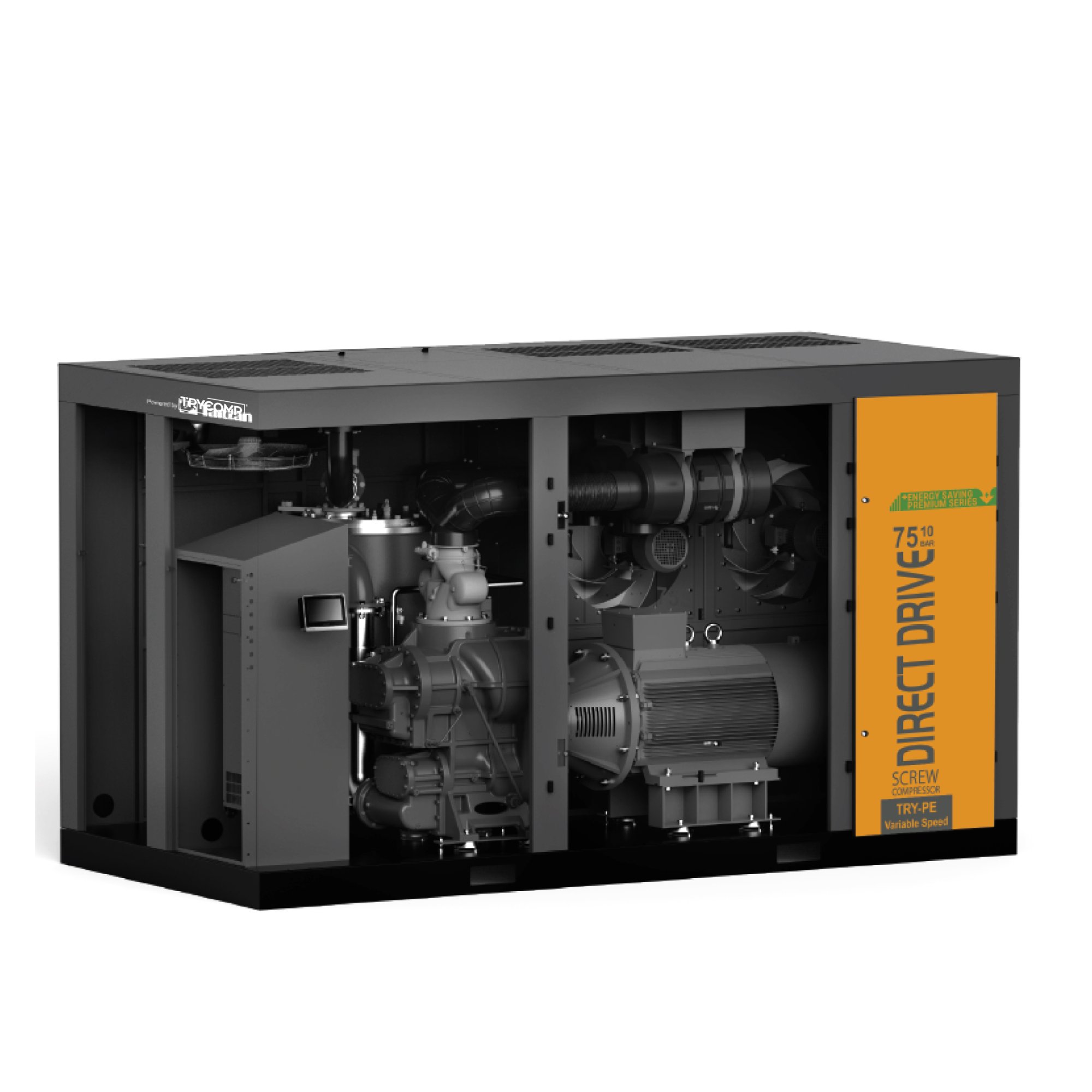
A workshop with short bursts of air behaves differently from a bottling line that runs continuously. Rotary screw compressors suit sustained industrial demand, while receiver storage can help with brief peaks. Where demand varies significantly across shifts, a correctly selected VSD compressor can follow the load more closely. A stable base load may favour fixed-speed equipment or a sequenced combination of fixed-speed and VSD units.
Include air quality and site conditions
The compressor is only one part of the system. Confirm whether the application needs dry air, fine filtration, activated carbon treatment or genuine oil-free compression. Review ambient temperature, ventilation, dust, altitude, electrical supply and available floor space. Poor ventilation can derate equipment and shorten component life even when the airflow calculation is correct.
How we verify the final selection
Send us your equipment list, operating pressure, shift pattern, current compressor details and any measured flow data. We compare the calculated requirement with available compressor FAD at the chosen pressure, then select the receiver, dryer, filters and pipe connections as one package. For existing plants, a site assessment or data logging exercise is more reliable than guessing from the old motor size.
Use the free calculators
Build an initial estimate for compressor demand, receiver size and electricity cost, then send the result to our team for verification.
Frequently asked questions
No. Use required airflow and pressure first, then match those requirements to a compressor data sheet at the intended working pressure.
Allow enough for credible leakage and planned growth, but avoid an arbitrary oversized margin. The right allowance depends on demand stability and future projects.
Send required pressure, estimated or measured flow, operating hours, application, electrical supply, air-quality needs and site location.
Technical references
This guide is educational and uses principles reflected in manufacturer and industry guidance. Final equipment selection must be checked against the selected model’s data sheet and site conditions.