
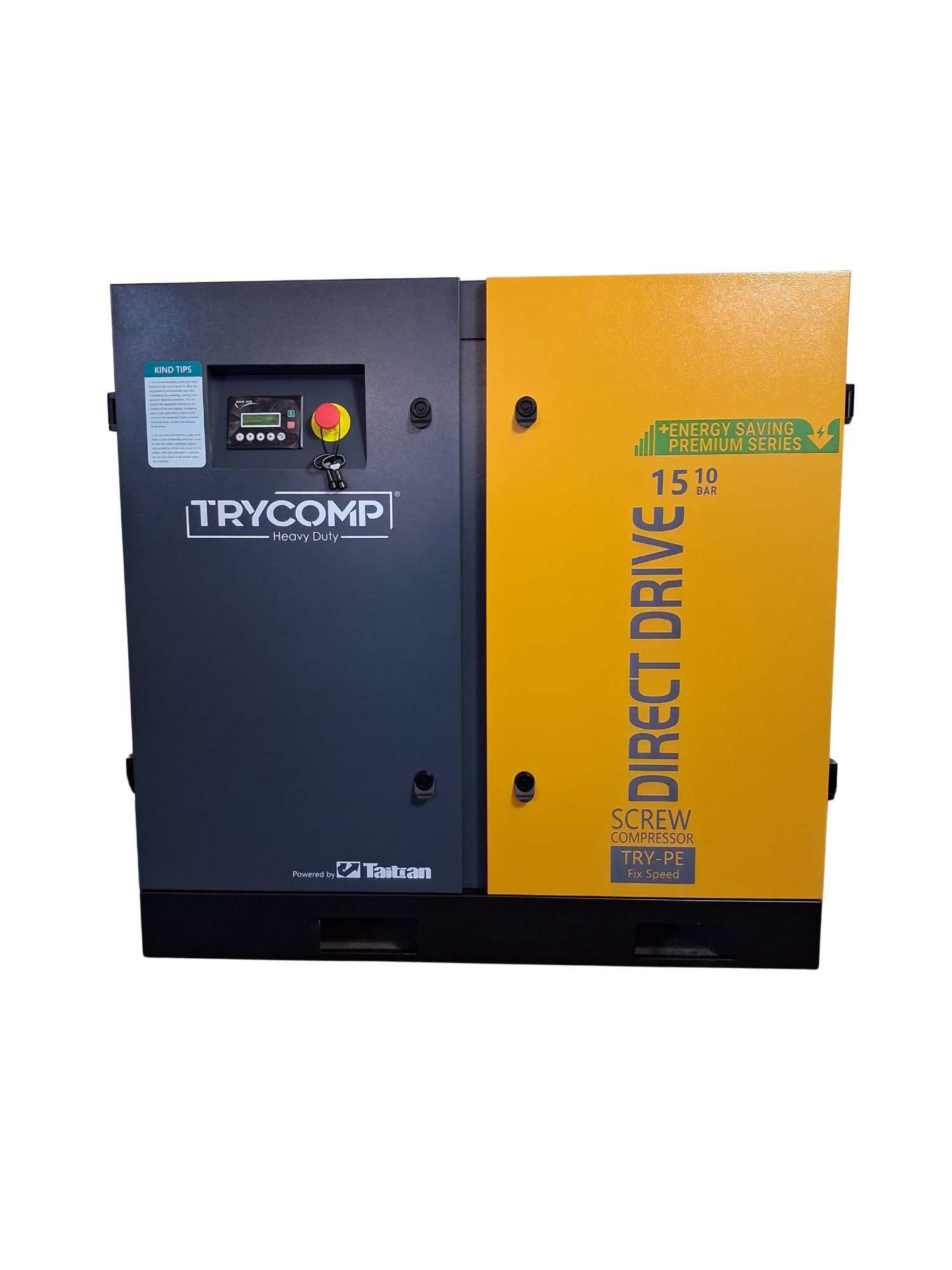
The main difference is how the air is produced
A piston compressor uses reciprocating cylinders and normally delivers air in pulses. A rotary screw compressor uses meshing rotors to produce a steadier flow. Both technologies have a place, but they are designed around different operating patterns.
When a piston compressor makes sense
Piston machines can be suitable for small workshops, intermittent tyre inflation, occasional tool use and applications with modest air demand. Their purchase price is often lower. They also tolerate long idle periods well. The key is to respect the stated duty cycle and allow cooling time where required.
When a screw compressor is the stronger choice
A rotary screw compressor is usually better for continuous or high-hour industrial use, production lines, multiple simultaneous users and sites where noise matters. The enclosed package, steadier airflow and control system make it easier to integrate into a plant network. Screw compressors are commonly chosen when compressed air is a production utility rather than an occasional workshop tool.
Compare total cost, not only capital cost
Electricity, downtime, service intervals, spares availability and production risk often outweigh the initial price over the life of the machine. An undersized piston compressor that runs beyond its intended duty can become expensive through heat, wear and lost production. An oversized screw compressor can also waste power if it spends too much time unloaded.
Receiver, dryer and filtration still matter
Either compressor type may need an air receiver to stabilise demand. Moisture removal and filtration must be selected for the application. Spray painting, instrumentation, packaging and food-related processes have different air-quality priorities. Buying the correct compressor without the correct treatment package only solves part of the requirement.
How we help you choose
We review your daily operating hours, peak and average demand, pressure, environment, noise limits and maintenance capacity. Where intermittent demand is genuinely low, we will not force a screw compressor into the application. Where production depends on air throughout the shift, we will explain why a rotary screw package may provide the more reliable lifecycle result.
Use the free calculators
Build an initial estimate for compressor demand, receiver size and electricity cost, then send the result to our team for verification.
Frequently asked questions
No. It is generally better for sustained industrial demand, while a piston compressor can be economical for genuinely intermittent use.
Enclosed rotary screw compressors are generally quieter than comparable industrial piston installations, but confirm the declared sound level for the selected model.
The receiver must be correctly rated and sized for the system pressure and demand. The required volume can differ by control method and application.
Technical references
This guide is educational and uses principles reflected in manufacturer and industry guidance. Final equipment selection must be checked against the selected model’s data sheet and site conditions.